Queen of Sheba
The legendary monarch whose visit to King Solomon forged a connection that shaped Ethiopian identity and the Solomonic dynasty.
"The Queen of Sheba heard of Solomon's fame... and she came to Jerusalem with a very great retinue, with camels bearing spices, and very much gold, and precious stones."
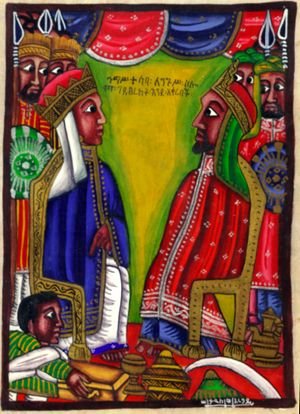
The Legendary Journey
According to the Ethiopian national epic, the Kebra Nagast (Glory of the Kings), the Queen of Sheba (known in Ethiopia as Makeda) ruled over a vast, prosperous kingdom encompassing parts of modern-day Ethiopia, Eritrea, and Yemen. Hearing of King Solomon's legendary wisdom, she embarked on an arduous journey to Jerusalem.
Her visit was not merely diplomatic; it was a profound meeting of minds. The Kebra Nagast details how Solomon answered all her difficult questions, and how their union resulted in the birth of a son, Menelik I, who would become the first Emperor of Ethiopia.
Significance to Ethiopian Identity
- The Solomonic Dynasty: Established the lineage of Ethiopian emperors claiming direct descent from King Solomon and Queen of Sheba, a dynasty that ruled until 1974.
- Religious Heritage: Makeda's conversion to the faith of Solomon marks the beginning of monotheism in Ethiopia, paving the way for its rich Judeo-Christian heritage.
- Cultural Icon: She represents independence, wisdom, and wealth. Her story is woven into the very fabric of Ethiopian culture, celebrated in art, music, and oral traditions.
A Lasting Cultural Impact
The story of Makeda transcends historical debate; it is a foundational pillar of Ethiopian consciousness. It connects the Horn of Africa to the biblical narrative, creating a unique synthesis of African and Near Eastern traditions that is vividly alive in Ethiopian orthodox practices, manuscript paintings, and the national psyche today.